1.1
What Is the Stock Market?
The stock market is the system through which publicly listed companies’ shares are bought and sold. It is not one physical place — it is a network of exchanges, brokers, and electronic systems. Millions of transactions happen every second across this network. Each transaction has a buyer, a seller, and an agreed price.
The stock market serves two core functions. First, it allows companies to raise capital by selling shares to the public. Second, it gives those shareholders a way to sell their shares to other investors at any time during market hours.
A Marketplace, Not a Building
Think of the stock market as a permanent auction house — one that never sleeps across the globe. When the US market closes, Asian markets open. When Asian markets close, European markets take over. As a trader, you are always participating in a global pricing mechanism, even when your local exchange is shut.
Key Point: The price of a stock at any moment is simply the last price at which a buyer and seller agreed to trade. Nothing more, nothing less.
The Two Major US Exchanges: NYSE and NASDAQ
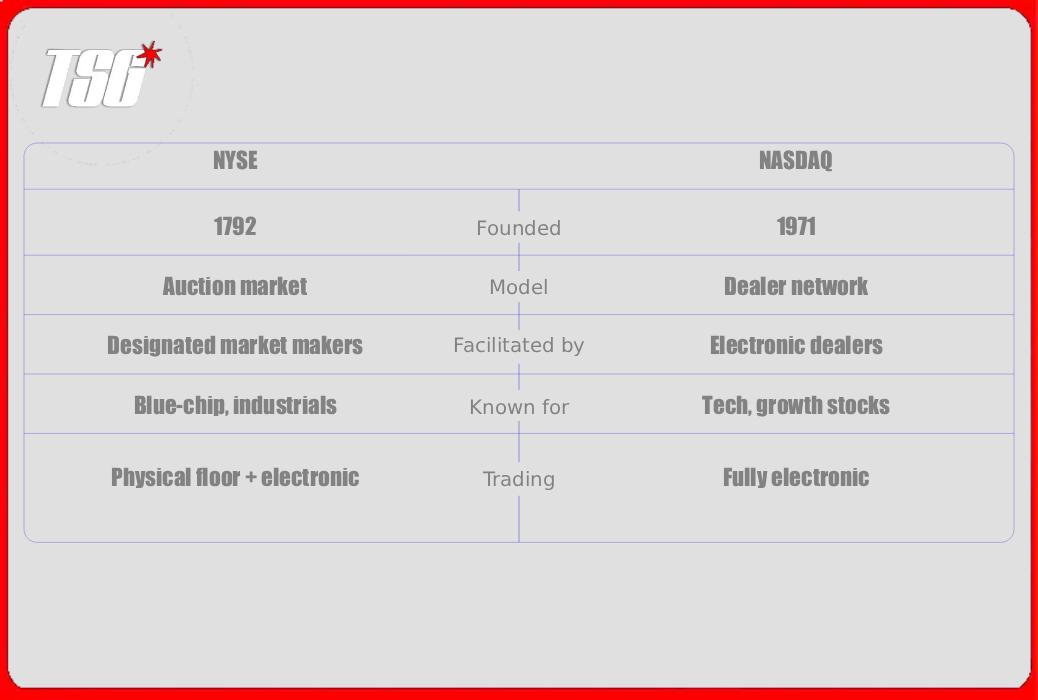
Two exchanges dominate US equity trading. Understanding both matters because they operate differently and attract different types of companies.
Figure 1 — NYSE vs NASDAQ: key differences at a glance
The NYSE uses designated market makers to facilitate trading. NASDAQ operates as an electronic dealer network. For most traders, the practical difference is minimal — your broker routes orders to either exchange automatically.
1.2
How Stocks Are Bought and Sold
Understanding order flow is the difference between trading blind and trading with purpose. Every time you click ‘buy’ or ‘sell’, a precise sequence of events happens behind the scenes. Most traders never learn this sequence. The ones who do gain an edge.
You never buy shares directly from a company. After a company’s initial public offering (IPO), its shares trade on the secondary market — meaning you buy from other traders, not the company itself. The company has already received its capital. The market is now a venue for traders to exchange ownership.
Buyers, Sellers, and the Role of Brokers
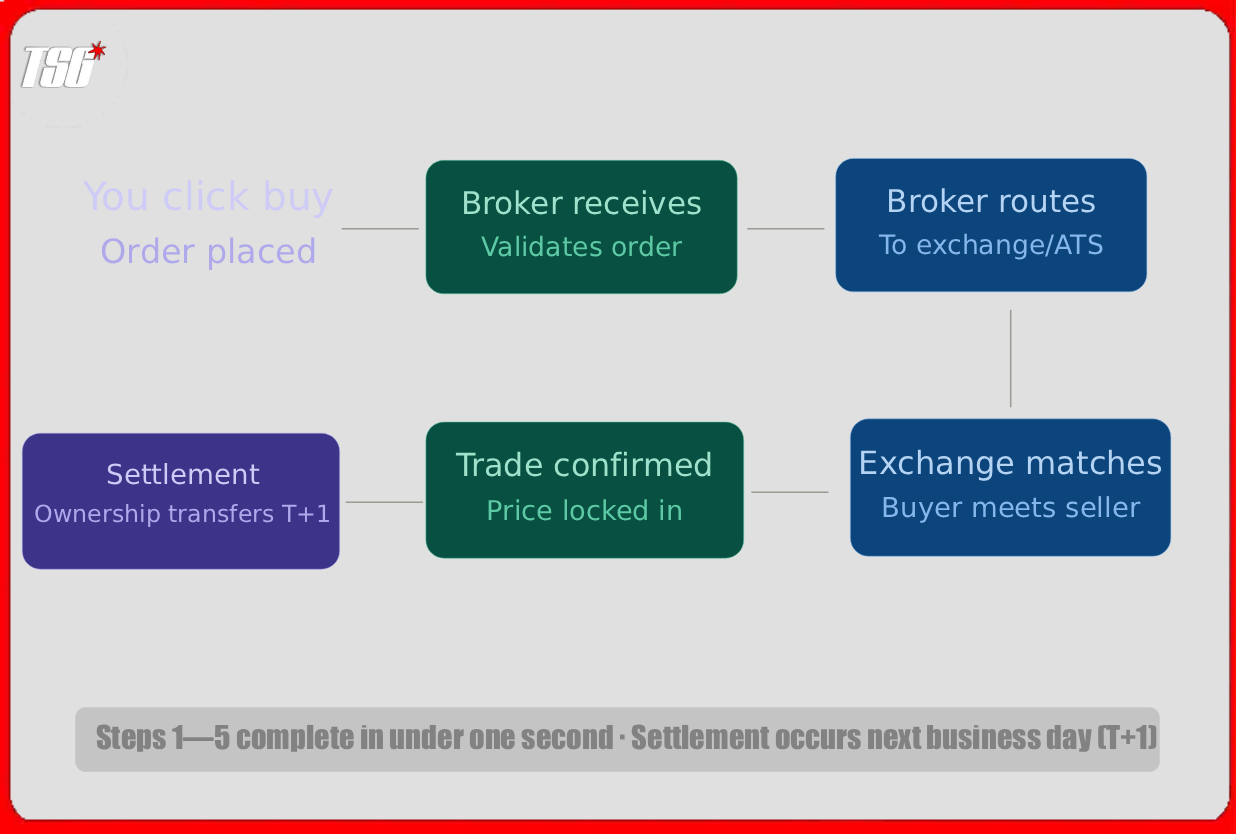
A broker is the intermediary between you and the exchange. When you place a trade, your broker receives the order, validates it, and routes it to the exchange or an alternative trading system. The exchange matches your order with an opposing one.
Retail brokers — platforms like Interactive Brokers, TD Ameritrade, or eToro — are the entry point for most individual traders. They provide the interface, margin, and order routing. The exchange provides the matching and settlement infrastructure.
How a Trade Is Executed: Step by Step
Here is what happens in under a second when you place a market buy order:
Bid Price, Ask Price, and the Spread
The bid-ask spread is one of the most important concepts in active trading. Every stock has two prices at any moment: the bid (what buyers are willing to pay) and the ask (what sellers are willing to accept). The difference between them is the spread.
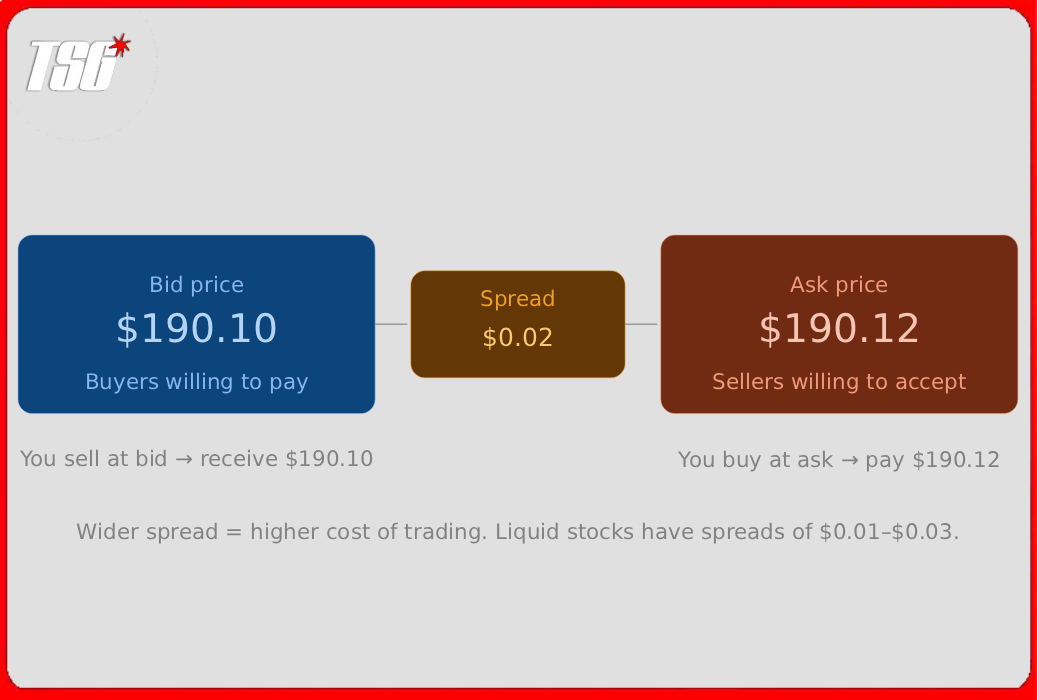
Example: If Apple’s bid is $190.10 and the ask is $190.12, the spread is $0.02. That is the cost of immediacy — the price you pay to enter a position right now, rather than waiting for your price.
| Term | Definition | Implication for Traders |
|---|---|---|
| Bid Price | The highest price a buyer is currently offering | If you sell immediately, you receive the bid price |
| Ask Price | The lowest price a seller is currently willing to accept | If you buy immediately, you pay the ask price |
| Spread | The difference between bid and ask | A wider spread means higher trading costs |
| Liquid Stock | High volume, narrow spread (e.g. $0.01–$0.03) | Easier to enter and exit without price impact |
| Illiquid Stock | Low volume, wide spread (e.g., $0.10–$0.50) | Harder to exit without moving the price against you |
Trader’s Rule: Always check the spread before entering a trade. On a volatile stock with a $0.30 spread, you start every trade already down $0.30 per share.
1.3
How Stock Prices Move
Price movement is the only thing that creates profit or loss for a trader. Understanding why prices move — and how fast — is not optional. It is the core of the craft.
Every price move is the result of an imbalance. When buyers outnumber sellers, prices rise. When sellers outnumber buyers, prices fall. When they are balanced, prices range sideways. Your job as a trader is to identify which condition you are in — before you place a trade.
Supply and Demand in Real Time
Supply and demand are not abstract economic concepts — they are visible, measurable, and actionable. The order book shows you the live queue of buyers and sellers at every price level. When a large buy order hits the market and clears all the sellers at the current price, the price jumps to the next available seller. That is a price move.
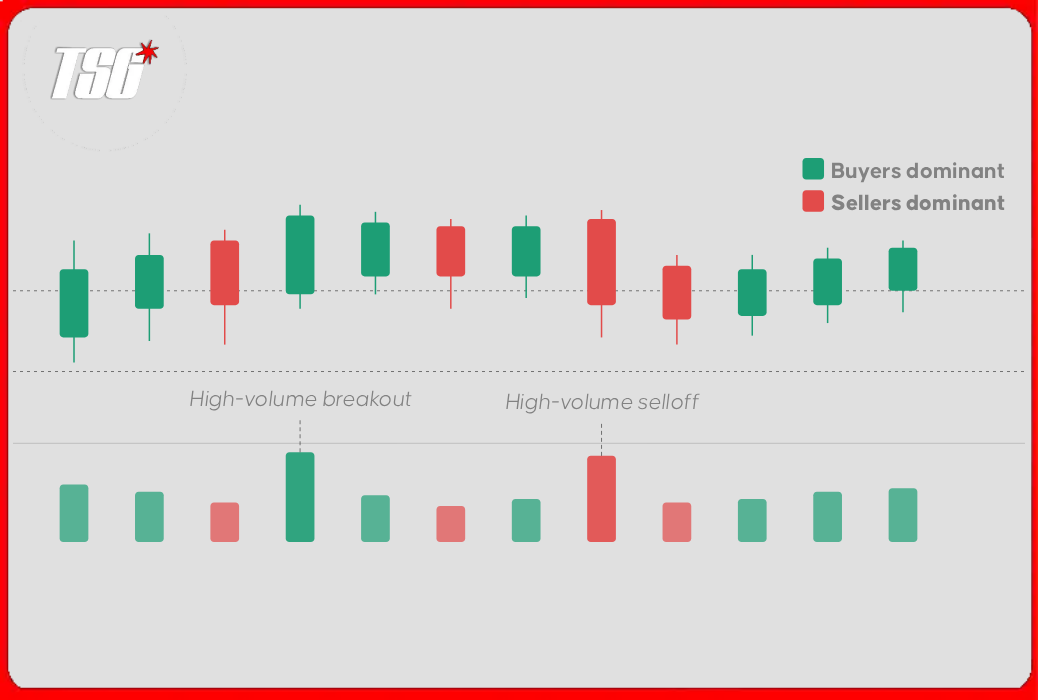
Volume is the purest signal of supply/demand strength. A price move on high volume means conviction — many participants agreed on that direction. A move on low volume is fragile — it can reverse quickly with a single large order.
How Earnings Reports Move Prices
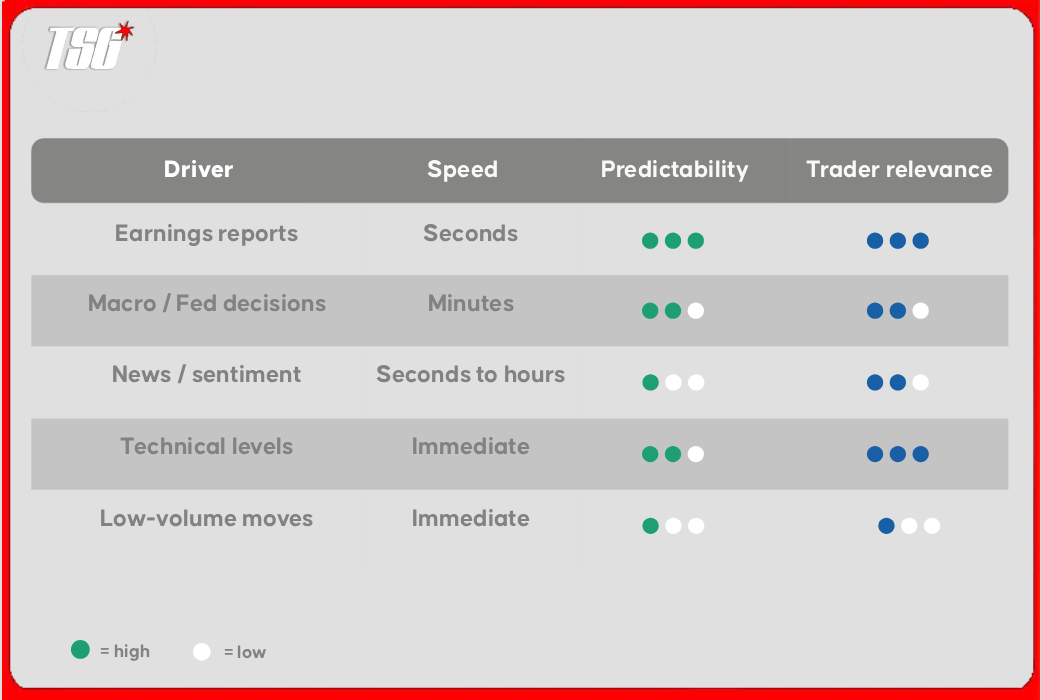
Earnings reports are the single most powerful recurring price driver. Every public company reports financial results quarterly. When results beat analyst expectations, buyers flood in and prices jump. When results miss, sellers dominate, and prices drop. The move happens in seconds.
It is not just the earnings number that matters — it is the guidance. A company can post strong earnings and still fall sharply if its forward guidance is weak. Traders learn to read both the headline number and the commentary simultaneously.
The Role of News and Market Sentiment
Beyond earnings, news and sentiment drive prices constantly. A geopolitical event, a central bank announcement, or a product recall can all move a stock — or the entire market — within seconds of the headline dropping.
Sentiment is the collective mood of all market participants. When sentiment is bullish, traders buy dips and ignore bad news. When sentiment is bearish, even good news gets sold. Reading sentiment correctly is an advanced skill — but knowing it exists is the first step.
1.4
Who Participates in the Stock Market?
You are not trading in isolation. Every order you place interacts with orders from millions of other participants — each with different goals, time horizons, and resources. Knowing who you are trading against changes how you approach every setup.
Retail vs. Institutional Investors
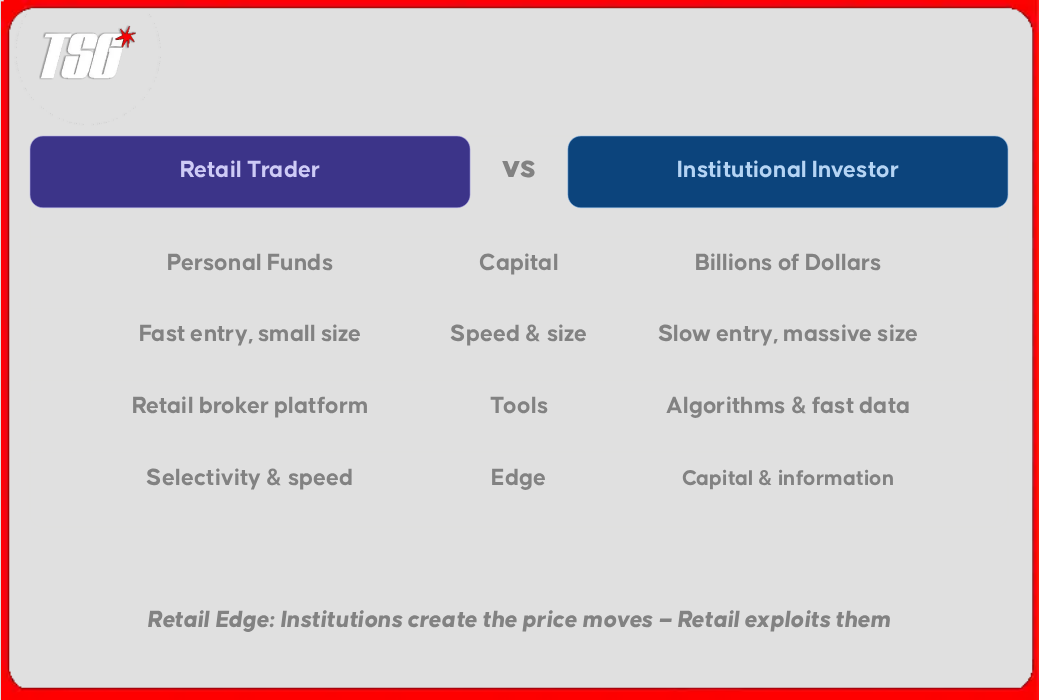
Retail traders are individual participants trading their own capital. Institutional participants — hedge funds, pension funds, mutual funds, and proprietary trading firms — manage billions of dollars. Institutions cannot buy 10,000 shares of a stock without moving the price. They operate differently: splitting orders, using algorithms, and entering positions over days or weeks.
This creates an edge for retail traders in one specific area: speed and size. A retail trader can enter and exit a small position instantly, at the exact price they want. Institutions cannot. Watching where institutional order flow appears on a chart — through volume clusters and price gaps — is one of the most valuable skills in technical analysis.
Market Makers and Their Role in Liquidity
Market makers are firms that commit to always buying and selling a specific stock, providing continuous liquidity. They profit from the bid-ask spread and take on inventory risk in return. Without market makers, many stocks would be impossible to trade efficiently — the spread would widen to the point where trading costs would eliminate any edge.
Key Insight: Market makers are not your enemies. They provide the liquidity that allows you to trade. Your focus should be on the spread they charge, not their existence.
1.5
Stock Market Hours and Trading Sessions
The US stock market does not run 24 hours, but activity occurs outside regular hours. Understanding the three daily sessions helps you plan when to trade and when to stay out.
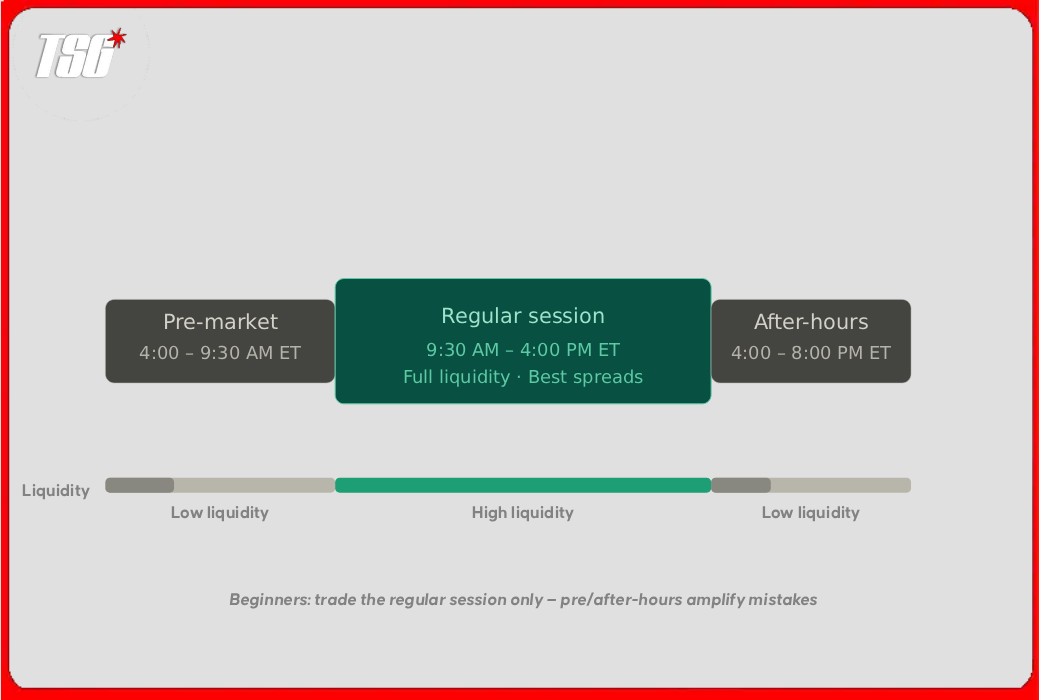
The first 30 minutes after the open (9:30–10:00 AM ET) are the most volatile. Large institutional orders are executed, overnight positions are unwound, and earnings reactions play out. Many experienced traders specifically target this window. Many beginners specifically lose money in it.
Beginner Rule: Trade the regular session only. Pre-market and after-hours sessions have lower liquidity and wider spreads — conditions that amplify mistakes and shrink edges.
1.6
Common Beginner Mistakes to Avoid
The market is a highly efficient system for transferring money from impatient, underprepared traders to patient, disciplined ones. Most beginner losses are not caused by bad stock picks — they are caused by structural mistakes that repeat until the trader learns to stop making them.
The most destructive beginner mistakes:
- Trading without a plan. Entering a trade without knowing your stop-loss, profit target, or position size is gambling, not trading.
- Overtrading. Taking every setup that moves leads to high commission costs, emotional fatigue, and low-quality entries.
- Ignoring the spread. On illiquid stocks, the spread alone can cost more than the potential profit on a small move.
- Chasing price. Buying after a stock has already moved sharply means buying into other traders’ exits — not entries.
- Skipping risk management. Trading without a stop-loss turns every bad trade into a potentially account-ending event.
- Overweighting news. By the time the news is public, the price has often already moved. React to price, not headlines.
Frequently Asked Questions
How much money do I need to start trading stocks?
There is no legal minimum for a standard cash account. Many brokers allow you to start with as little as $100. In practice, a minimum of $1,000–$2,000 gives you enough capital to size positions properly and absorb early losses without wiping out the account. The US Pattern Day Trader rule requires $25,000 to make more than three day trades per week in a margin account.
Can I lose more money than I invest in the stock market?
In a standard cash account, you cannot lose more than you invest. In a margin account — where you borrow capital to trade — losses can exceed your initial deposit. Beginners should start with a cash account and avoid margin until they have a proven, consistent track record.
What is the difference between trading and investing?
Investing means buying assets with the intention of holding them for months or years, profiting from long-term appreciation. Trading means actively buying and selling to profit from shorter-term price moves — ranging from minutes to weeks. This article focuses on trading: reading price action, managing risk, and executing setups systematically.
Is the stock market rigged against retail traders?
No, but it is uneven. Institutions have faster data, larger capital, and more sophisticated tools. Your edge as a retail trader is different: you can move quickly, trade small, and be highly selective. You do not need to beat institutions. You need to profit from the price moves they create.
How long does it take to become a consistently profitable trader?
Most research suggests 1–3 years of dedicated study and practice before consistent profitability — and that is with proper education, structured journaling, and strict risk management. Skipping the learning phase and jumping straight to live trading with large capital is the single most reliable way to lose money quickly.
1.7
Quiz
Continue Your Learning
➜ Now that you know how the market works, learn how to read what it’s telling you — continue to: How to Read a Stock Quote: What Every Number Means.