Risk Warning: Trading in CFDs, involves a high level of risk. 77.95% of retail investor accounts lose money when trading CFDs with this provider. It is possible to lose all your invested capital. Such financial products may not be suitable or allowed for you, and you should consider such restrictions and whether you understand how CFDs work and all the risks involved.

Short Selling: Strategies, Risks, and Rewards
Frank J. Fabozzi
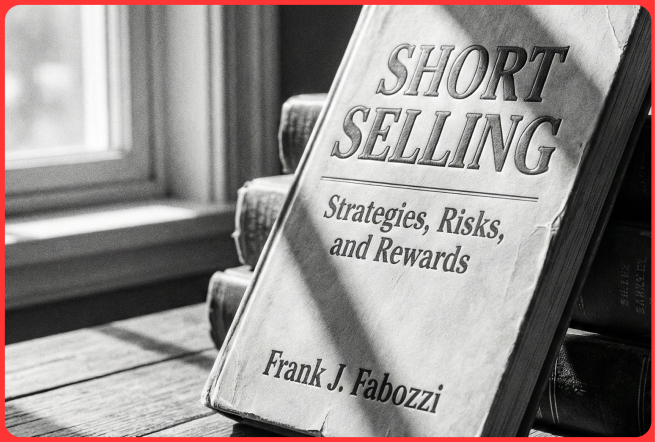
Table of Contents
Most people meet short selling in a panic headline. A stock collapses, and someone blames “the shorts.” A regulator bans the practice for a few weeks. A CEO goes on television and calls skeptics unpatriotic. In that noise, the basic trade gets lost. Short selling is the act of borrowing a security, selling it, and later repurchasing it. If the price falls, the short seller keeps the difference. If it rises, losses can proliferate.
Short Selling: Strategies, Risks, and Rewards by Frank J. Fabozzi gathers academics and practitioners to clear that fog. The book explains why some stocks become severely overpriced, how constraints on pessimists allow bubbles to grow, and how short sellers help correct those errors. It also shows how shorting can fit into real portfolios: as a pure bet on overvaluation, as a hedge against long exposure, and as a way to improve risk‑return trade‑offs when used with discipline. From the start, one point is sharp. Short selling is not a stunt for thrill‑seekers. It is a demanding tool that can make markets more efficient and portfolios more resilient—if the trader respects its risks.
Why Short Selling Exists
Short selling looks simple on a diagram and toxic in a headline. The trade lets an investor profit when prices fall, which clashes with the usual story of buying good companies and cheering them higher. Fabozzi’s book starts by stripping that tension down. It asks what short selling really is, why markets bother to allow it, and what happens when pessimists are forced to stay silent.
One Trade, Two Reputations
Most investors grow up on the long side. They buy, they hold, and they cheer for higher prices. Short sellers stand on the other bank. They borrow shares, sell them, and hope to buy back at a lower cost. On a whiteboard, it is just the mirror image of a long trade. In the real world, it carries a different reputation. Short sellers are blamed for crashes, accused of attacking companies, and treated as villains whenever markets fall. Fabozzi’s collection opens by cutting through that emotion. It asks a simple question: if short selling is so hated, why do healthy markets keep allowing it?
Prices Without a Ceiling
The first answer is about price. In a market where no one can sell short, pessimists have only one move: do nothing. They can refuse to buy, but they cannot lean against a stock they believe is wildly overpriced. That leaves prices set mostly by optimists and momentum. Short Selling: Strategies, Risks, and Rewards highlights research showing that when short selling is constrained or banned, the most expensive, hardest‑to‑short stocks often deliver the worst future returns. The problem is not that shorts make prices fall. It is that without them, there is no effective ceiling on how far a story can run before it breaks.
Shorts as Shock Absorbers
The book also reframes short sellers as liquidity providers. When a popular stock surges, existing holders may hesitate to sell. They fear missing more upside. Short sellers step in as a new supply. They borrow shares and sell into demand, smoothing the climb. Later, when news turns or enthusiasm fades, shorts must buy to close their positions. That buying can slow or soften declines. Recent studies find that informed short sellers often add depth to order books and reduce intraday volatility, especially in stressed periods. In that sense, they work as shock absorbers, even if their profits come from price drops.
What Shorting Adds to a Portfolio
Finally, the chapter points to portfolio construction. In theory, allowing both long and short positions constantly expands the set of attainable risk–return combinations. An investor can hedge sector or market exposure, isolate relative‑value bets, and shape payoff profiles more precisely. In practice, shorting introduces new dangers: borrowing costs, recall risk, squeezes, and the simple fact that a stock can rise more than a pessimist can stay solvent. Fabozzi’s contributors do not hide those risks. They argue that these are exactly the reasons why short selling should be understood as a professional tool, not casual speculation. Used carefully, it lets a portfolio express views on mispricing and manage risk with far more flexibility than long‑only strategies ever allow.
The Mechanics Behind the Trade\
Short selling starts as paperwork before it becomes an opinion. A trader cannot simply hit “sell” on shares not owned. The book walks through the plumbing: how shares are located, borrowed, delivered, and later returned. This chapter makes one point clear. Anyone who shorts without understanding the mechanics is betting into a game where the rules can move against them at the worst time.
Borrow, Sell, Buy Back
Fabozzi’s contributors strip the process down. A broker locates shares from a lender, usually a large institution or another client’s margin account. The short seller borrows those shares and sells them into the market, receiving cash but owing stock. At some later point, the short must be closed. The trader buys shares in the market and returns them to the lender. If the buy‑back price is lower, the difference is profit. If it is higher, the difference is a loss. During the life of the trade, the short seller may pay stock-borrowing fees, pass through dividends, and face the risk that the lender will recall the shares and demand them back.
Hidden Frictions in the Plumbing
The chapter stresses that these frictions are not side notes. They shape which trades make sense. Hard‑to‑borrow stocks can carry high fees that eat into returns. Dividends and special distributions turn a flat price path into a losing short. Recall risk can force an exit in the middle of a squeeze, when prices are most painful. Settlement rules, locate requirements, and “naked” short‑selling bans also change how quickly and aggressively a trader can move. Short Selling: Strategies, Risks, and Rewards pushes a simple rule. Before a short seller judges the company, they must judge the mechanics: borrowing cost, availability, and the real ability to stay in the position if the trade is early or noisy.
Who Actually Shorts
Short selling is not a single crowd doing a single thing. The book shows a broad mix of players using the same basic trade for very different reasons. Some hunt for overvalued businesses. Others hedge long exposure or exploit small mispricings between related securities. Seeing who shorts, and why, explains a lot of the flow that shows up in data and on screens.
From Hedge Funds to Hedgers
Fabozzi’s volume starts with the obvious group: long–short hedge funds. They run books that hold favored stocks long and troubled or overpriced stocks short. Their goal is to separate stock‑picking skill from overall market direction. Market‑neutral funds push this idea further, trying to balance long and short exposure so that gains come mostly from relative performance. The book also highlights convertible‑arbitrage funds, merger‑arbitrage desks, and other specialists who short not because they hate a company, but because a structure demands it. They may be long a bond, warrant, or option and short the underlying stock to lock in a spread.
Shorting as Insurance
Beyond active bets, short selling appears as insurance. An investor heavily exposed to a sector or index can short futures, ETFs, or baskets of names to cut risk without dumping core holdings. Dealers and market makers may short to hedge the inventory they are forced to take on while providing liquidity. Even individual traders can use shorts to offset concentrated long positions or to shape payoff profiles around events. The chapter’s message is blunt. Not every short seller is a “bear” calling for collapse. Many are simply managing risk in a world where prices move both ways.
Structural Risks You Cannot Ignore
The math of a short is lopsided from the start. A stock can fall only to zero, but it can, in theory, rise without limit. Short Selling: Strategies, Risks, and Rewards anchors this chapter on that asymmetry and on all the ways it worsens in practice. The authors want readers to see that short selling does not just add normal trading risk. It layers on structural dangers that must be respected before any setup looks attractive.
Unlimited Upside, Limited Sleep
Fabozzi’s contributors list the core threats. Price risk is first. A surprise bid, squeeze, or regime change can send a crowded short sharply higher. Borrow costs can spike as more traders try to short the same name, turning a good idea into a grind of negative carry. Dividends, special distributions, and corporate actions create additional paths to loss that long-term investors never face. There is also the psychological strain. Being short into a rising tape means watching red numbers while the world cheers the other side. The chapter argues that without hard position limits, maximum loss rules, and pre‑planned exit points, these structural risks will eventually break even a talented short seller.
Constraints That Distort Price
Short selling does not happen in a vacuum. Rules, costs, and frictions can make it hard or impossible to express a negative view, even when the evidence is strong. Fabozzi’s book leans on theory and data to show what happens in that world. When disagreement is high but short selling is constrained, prices tend to be set by optimists rather than by the full spectrum of opinion.
When Pessimists Are Muzzled
Edward Miller’s divergence‑of‑opinion framework runs through this discussion. Investors disagree about value. Some think a stock is cheap, others think it is expensive. If everyone can trade freely, the price lands somewhere between those views. But when short selling is restricted, pessimists cannot fully act. They may be limited by borrowing availability, margin rules, or outright bans. The book highlights evidence that stocks with tight short‑sale constraints and high disagreement often become overpriced and then underperform badly later. The speculative premium is not magic. It is the result of silencing one side of the market.
Signals in Short Interest
The chapter also looks at what can still be learned from short‑interest data. High short interest means a meaningful share of shares outstanding is already borrowed and sold. That is a direct sign of disagreement with the current price. Fabozzi’s contributors cite studies showing that high short interest, especially when paired with analyst disagreement, predicts lower future returns on average. At the same time, they warn that constraints can limit how far shorts can push back. A heavily shorted stock may stay overpriced longer than logic suggests. For a careful trader, short‑interest levels, borrow fees, and measures of disagreement become tools for spotting both danger and opportunity in the tape.
Finding Overpriced Stories
Short sellers do not get paid for hating stocks. They get paid for finding prices that stand far above what the underlying business can justify. Fabozzi’s book stresses that vague negativity is not a strategy. The work begins with a clear picture of what “overpriced” means and which kinds of errors are likely to be exposed in a reasonable time.
Comfort on the Wrong Side
The contributors point to recurring patterns. Investors extrapolate recent growth too far into the future. They ignore new competition, market saturation, or low‑probability shocks that can break a story. Short Selling: Strategies, Risks, and Rewards highlights research showing that stocks with extreme valuations, high disagreement, and limited shorting often deliver poor returns later when reality catches up. The best candidates are not just expensive. They are built on assumptions that cannot withstand complex numbers. Short sellers look for crowded comfort: sectors everyone loves, narratives that feel too smooth, and management teams that promise a straight line up in a world that never moves that way.
Accounting Red Flags
Price alone is not enough. Many of the strongest short cases start inside the financial statements. This chapter turns to earnings quality and the tricks that can dress up weak businesses. Fabozzi’s contributors lay out the classic signs: profits rising while cash flows lag, aggressive revenue recognition, and balance sheets that swell with goodwill or hard‑to‑value assets.
Earnings That Do Not Add Up
The book walks through concrete examples. Firms report high net income and earnings per share, while operating cash flow stalls or declines. Days‑sales‑outstanding stretch higher as customers take longer to pay. Revenue recognition methods, such as percentage‑of‑completion accounting, let management pull future sales into the present by underestimating total project costs. These choices make early periods look healthy and push losses into the future. Short sellers hunt for these gaps between reported performance and cash reality. When earnings and cash part ways for long enough, either the numbers converge, or the stock does.
Economic Value, Not Just Earnings
Prices follow stories in the short run and value in the long run. Earnings per share sit at the center of most stories. Fabozzi’s book pushes short sellers to look one layer deeper. This chapter introduces tools such as net present value (NPV) and economic value added (EVA) to determine whether a business is truly creating wealth or merely reporting accounting profit.
EVA and Wealth Creation
Economic value added starts from a simple idea. A firm is not really profitable unless it earns more than its full cost of capital. EVA takes after‑tax operating profit and subtracts a charge for the capital employed in the business. Positive EVA means the company is creating shareholder wealth. Negative EVA means it is destroying it, even if reported earnings look fine. Short Selling: Strategies, Risks, and Rewards shows how stocks with high reported earnings but weak or negative EVA can be fertile ground for shorts. In those cases, the market may be paying up for growth that does not actually cover the economic cost of the resources it consumes.
When Growth Hides Destruction
The chapter connects EVA and NPV to short ideas. Projects with negative NPV and firms with persistently negative EVA eventually face pressure: rising funding costs, falling credit quality, or disappointed equity holders. For a short seller, the goal is to find companies that the market values as if they were compounding wealth, even though EVA trends say the opposite. Fabozzi’s contributors argue that combining traditional ratios with EVA‑style measures helps separate true compounders from growth mirages. When price tells one story and economic value tells another, the gap between them becomes a potential target—if the short seller can survive long enough for that gap to close.
Short Selling and Market Efficiency
Short selling is often attacked as destabilizing. Fabozzi’s book argues almost the opposite. When informed, traders can go short; prices move closer to fair value, not further away. This chapter connects short selling to the core idea of market efficiency: that prices should reflect available information as quickly and accurately as possible.
Information in Negative Bets
The contributors point to research showing that short sellers tend to be informed and skilled. Stocks with rising short interest and heavy shorting pressure often underperform, especially when fundamentals later disappoint. Short Selling: Strategies, Risks, and Rewards explains that these traders are not guessing. They analyze earnings quality, industry trends, and valuation, then express negative views through short positions. Their trades inject bad news and skepticism into prices faster than long‑only investors typically do. In that sense, short selling speeds up the incorporation of negative information into the tape, improving price discovery.
Efficiency With Rough Edges
The chapter does not romanticize shorts. Herding, crowded trades, and momentum‑driven short attacks can push prices too low for a time, just as long‑only fads push them too high. Temporary overshooting is the cost of allowing both directions to trade freely. Fabozzi’s contributors argue that, on balance, markets with active short selling exhibit fewer extreme overvaluations, less analyst optimism bias, and faster corrections to bad news. The rough edges remain, but the overall result is a price system that reflects both hope and doubt rather than only one.
Regulation and Bans
Whenever markets crack, short selling moves to the front of the blame line. Politicians and regulators respond with new rules, temporary bans, or tighter constraints. Fabozzi’s book devotes a chapter to what those interventions actually do. It separates popular claims about “stopping abuse” from evidence on how bans affect liquidity, volatility, and price accuracy.
Rules That Change the Game
The contributors review episodes where regulators restricted or banned short selling, especially around financial crises. In many cases, prohibited stocks saw wider bid‑ask spreads, lower trading volumes, and weaker price discovery. Prices did not become more stable. They simply became less informative, as pessimistic views were pushed off the leading exchanges or expressed through less direct channels. Short Selling: Strategies, Risks, and Rewards stresses that well‑designed rules around locate requirements, reporting, and settlement can reduce abuse without shutting down legitimate negative bets. The trade‑off is sharp. Rules that sound protective on television can quietly raise costs, mute signals, and leave markets more fragile when the next shock hits.
Squeezes and Forced Exits
Short-selling risk is not just a theory on a payoff chart. It shows up in violent price spikes that trap traders who are on the right idea but arrive at the wrong time. Fabozzi’s book uses short squeezes to show how structure and crowding can turn a reasonable bet into a fast, uncontrolled loss. The chapter asks one question over and over: what happens when everyone on the same side tries to leave at once.
When the Trade Becomes the Fuel
A squeeze starts with a stock that is heavily shorted and tightly held. Any sharp move up—driven by news, insider buying, retail surges, or simple rumor—pushes short sellers into pain. Some exit on stop‑loss rules. Others are forced out by margin calls or borrow recalls. Closing a short means buying back stock. That buying pressure adds to the original move, driving the price even higher and triggering more forced covers. The result is a feedback loop where the trade itself becomes fuel for the rally. Fundamentals may not have changed much. Positioning has. Fabozzi’s contributors stress that avoiding ruin in squeezes is less about predicting every spike and more about limits: position size, maximum loss, and a clear rule for getting out before the loop runs to the top.
Shorting Inside a Portfolio
Most investors will never run a pure short book. For them, the question is different. How can short selling live inside a broader portfolio without turning everything into a high‑stress gamble? This chapter connects Fabozzi’s themes back to allocation: long–short equity, market‑neutral strategies, and targeted hedges. The focus is not on trophy shorts. It is about making the whole portfolio more resilient.
Hedging and Long–Short Designs
Fabozzi’s book explains how allowing shorts effectively doubles the menu of positions a portfolio can hold. A manager can go long-favored stocks and short weaker peers, reducing reliance on overall market direction. Long–short and market‑neutral strategies use this to seek returns from relative performance while keeping net exposure controlled. The evidence the book cites shows that, when implemented with discipline, these structures can lower volatility and drawdowns without sacrificing all upside. The same logic applies on a smaller scale. An investor concentrated in one sector can short an ETF or a basket of names to blunt a downturn. The message is consistent with the rest of the volume. Short selling is not only a weapon for attacks. Used carefully, it is a risk tool that lets portfolios breathe through both bull and bear markets.
Behavioral Biases in Short Selling
It is easy to cast short sellers as pure rationalists. They bet against hype, dig into numbers, and often look right in hindsight. Fabozzi’s collection adds an important twist. Short sellers carry their own psychological baggage. The same behavioral biases that hurt long-term investors can quietly damage short-term performance and blunt the impact of negative information.
When Shorts Hold Losers Too Long
One pattern stands out. Studies of short‑selling behavior find a “disposition effect” on the short side. Short sellers are more likely to close profitable positions and hold on to losing ones, even when price action and new data argue the opposite. That mirrors the classic long‑side mistake of selling winners too early and riding losers too far. The book notes that this behavior reduces the predictive power of short closing activity and cuts into overall profitability. Bias does not erase the fact that many shorts are informed. It just means that information is not always used to the fullest.
Activist Shorts and Reputation Risk
Not all short sellers stay in the background. Some go public with detailed reports, media campaigns, and direct challenges to management. These activist shorts have brought down frauds and exposed serious governance failures. Fabozzi’s volume acknowledges their role while highlighting the extra risks they take on. The trade is no longer just about price. It is also about reputation and legal exposure.
Going Public With a Negative Thesis
Activist short sellers usually run concentrated positions backed by deep research. They publish reports questioning accounting, business models, or disclosures, and profit if the stock falls as the market digests those claims. When they are right, they can accelerate the correction of serious mispricing and even push regulators or boards to act. When they are wrong—or careless—they face lawsuits, regulatory scrutiny, and long public fights with target companies. The book’s message is cautious. Activist shorting can be a powerful force for transparency, but it raises the stakes on every part of the process: evidence quality, timing, risk control, and even personal security.
Limits to Arbitrage
In theory, mispriced assets should be easy targets. Arbitrageurs step in, trade against the error, and collect near‑riskless profits. Fabozzi’s book reminds readers that fundamental markets do not work as cleanly as they might seem. Short sellers who try to correct overpricing face hard limits: funding risk, career risk, model risk, and the stubborn fact that prices can stay wrong longer than capital can remain patient.
When “Cheap” and “Expensive” Stay That Way
The chapter leans on limits‑to‑arbitrage research. Traders betting against a mispricing are rarely fully hedged. Their positions can show significant losses before being proven right, forcing them to cut size or close out under pressure. Clients and risk managers may not tolerate a long stretch of red even if the thesis is sound. Short Selling: Strategies, Risks, and Rewards explains that these frictions help explain why clearly overvalued stocks and obvious bubbles can persist. Short sellers do not have infinite deep pockets to correct every error. They are constrained players operating under leverage, reputation pressure, and imperfect information.
Case Studies in Short Selling
Concepts become real when attached to names, dates, and charts. Fabozzi’s volume closes with case studies that tie together mechanics, analysis, and behavior. Some stories feature outright fraud. Others involve aggressive accounting, broken growth promises, or crowded “can’t lose” themes that eventually did.
From Thesis to Outcome
Each case follows the same arc. A short thesis begins with basic valuation work, then drills into business quality, earnings sustainability, and balance‑sheet strength. Red flags appear: weak cash flows, strained financing, or management incentives that favor short‑term numbers over long‑term health. Short interest builds as more traders see the same cracks. For a while, the price may ignore the warnings or even move higher. Then a trigger—an earnings miss, a regulatory action, a credit downgrade—forces the story to reset. The book uses these examples to underline its central lesson. Successful short selling is not about prophetic timing. It is about building a disciplined process, sizing risk correctly, and surviving long enough for reality to matter.
Closing Thoughts
Short Selling: Strategies, Risks, and Rewards ends on a clear divide. Short selling is both a pressure valve that keeps markets honest and one of the quickest ways to get hurt. The same trade that reins in bubbles and exposes weak businesses also exposes investors to asymmetric losses, funding strain, and intense psychological heat. The book never lets those two truths drift apart.
Fabozzi and his contributors show short sellers as working parts of a healthy market. They bring bad news into prices faster, supply liquidity when enthusiasm peaks, and give portfolio managers tools to hedge and shape risk instead of just enduring it. At the same time, every chapter underlines how easily a good thesis can die under leverage, constraints, squeezes, and human bias. Being “right” about the story is not enough if the trade structure is wrong.
Taken together, the message is blunt and practical. Short selling is not a rebellious bet against the market but a craft that demands more preparation, stricter rules, and thicker skin than buying and holding. For investors willing to treat it that way, it becomes more than a play on decline. It is a disciplined way to check excess, protect capital, and keep both optimism and skepticism visible in every price.