Risk Warning: Trading in CFDs, involves a high level of risk. 77.95% of retail investor accounts lose money when trading CFDs with this provider. It is possible to lose all your invested capital. Such financial products may not be suitable or allowed for you, and you should consider such restrictions and whether you understand how CFDs work and all the risks involved.

Mastering the Trade
John F. Carter
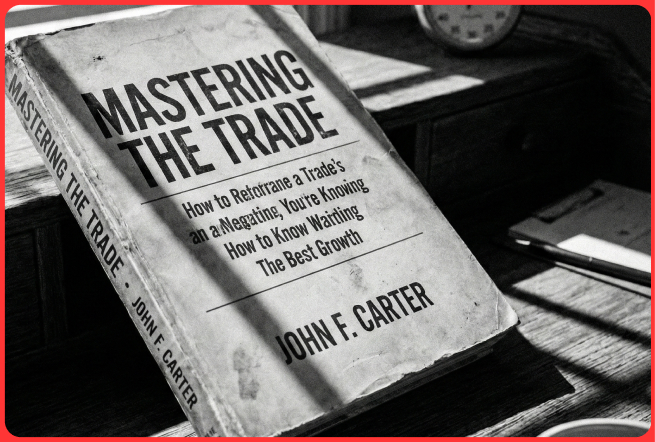
Table of Contents
Most people meet the markets through noise. Prices jump on headlines. Acronyms fill every corner of the screen. Social feeds shout confident opinions that reverse within hours. A new trader feels busy but rarely feels in control. Mastering the Trade by John F. Carter starts by rejecting that atmosphere completely. Carter treats trading as a job with hours, rules, and hard limits, not as an endless stream of guesses. The book shows a trader how to build a small group of reliable setups, a daily routine for finding them, and the emotional discipline to follow the plan when the screen turns red. From the first pages, he makes one promise. This is not a book of quick tricks. It is a working trader’s manual shaped by years at the desk, real gains, and very real losses.
The Mind That Places the Trade
Carter opens Mastering the Trade with the only tool every trader carries into every market: the mind behind the keyboard. He asks the reader to replay specific moments, not theories. Buying a stock because a chat room explodes with excitement. Adding size just to erase a painful loss. Watching a losing position sink while hoping it will somehow turn around. These scenes, he argues, ruin more accounts than bad indicators ever will. Mastering the Trade explains that fear, greed, boredom, and shame quietly rewrite rules in real time if they are not recognized.
Where Most Traders Break
Carter draws a sharp line between amateurs and professionals. Amateurs drift to the screen when they feel like it. They scan random symbols. They change plans the moment the price moves against them. Each trade becomes a fresh improvisation. Professionals behave differently. They write a plan before the opening. They know precisely which setups they will trade and which they will ignore. They accept that, on some days, nothing appears and that no trade is the correct decision. Carter calls this difference a true “trader’s edge”: calm preparation, realistic expectations, and the ability to sit still when conditions do not fit the playbook.
What Really Moves Price
Carter refuses to let candles float on the screen without a story behind them. Mastering the Trade opens this chapter with one question: What is pushing prices around today? He ties each move to forces traders already see in headlines and calendars. An earnings surprise pulls money into or out of one stock. A central bank statement jolts entire indexes. Sector rotation shifts volume quietly from one industry to another. Significant funds building or unloading positions leave thick trails in volume and intraday swings.
Fingerprints Beneath Every Candle
Carter walks through live examples. A stronger‑than‑expected jobs report sends index futures spiking on the opening print. A weak earnings release leaves a stock drifting on low volume for several days. A scheduled rate decision squeezes volatility flat, then releases it in a single violent bar when the news hits. Mastering the Trade treats these patterns as fingerprints. Once a trader learns to recognize them, charts stop looking random. They begin to read like a daily log of cause and effect: this event fired, this group moved, this instrument absorbed the shock. That understanding serves as the basis for every subsequent setup.
Tools That Earn Their Place
Most traders start by collecting indicators. They stack colors, signals, and panels until the screen looks important. Carter goes the other way. He treats every tool as a worker that must earn its pay or be fired. A few moving averages define the trend. Volatility bands show when the price is coiled or stretched. Volume confirms whether a move is real or just a thin spike. Everything else is suspect. If it does not help decide entries, exits, or size, it leaves the chart. The goal is simple: remove noise until only useful signals remain.
Clearing the Screen
Mastering the Trade pushes traders toward one clean layout. Same symbols each day. Same time frames. Same alert levels. The chart becomes a quiet map instead of a blinking arcade. When something moves or flashes, the trader already knows what it means and what the plan allows. That stability kills a lot of boredom trades. It also makes fundamental price changes stand out. Over time, the trader stops staring at the decoration and starts reading the structure.
The First Half Hour
The open feels like pure opportunity. Prices jump. Volume surges. New traders see motion and think it must be traded. Carter treats it as a sorting phase, not a playground. Overnight positions, fresh news, and trapped traders all rush through the tape at once. Gaps show how the market digested information while it was closed. Most of that flow is people escaping bad spots, not moving into clean setups. Mastering the Trade tells readers to watch, not to lunge.
The Sorting Zone
Carter defines the opening range as the high and low of the first time block. Inside that box, he studies behavior. Does the gap fill quickly and stall? Does price pause and then continue? Does it chop in place with no direction? Market internals and volume confirm whether institutions are leaning one way or simply cleaning up orders. Only when price breaks that box with real backing does he treat it as a potential trend for the day. Everything before that is noise. The rule is simple. Let the open draw the map. Only then choose between breakouts, fades, or standing aside.
Maps on the Chart
Once the early dust settles, traders need landmarks. Raw candles are not enough. Carter uses key levels so the chart stops feeling like open water. Daily, weekly, and monthly pivots act like road signs. Many professionals watch the same prices. That shared attention matters more than any complex formula. When price moves into those zones, behavior often changes. Hesitation, acceleration, or sharp rejection all speak louder there.
Pivots as Road Signs
Mastering the Trade shows how these levels frame plans instead of predictions. A break above a major pivot on substantial volume can justify a trend trade, with a stop tucked back inside the level. Repeated failure at a pivot on a quiet day can favor a fade back toward the middle of the range. Carter reminds the reader that pivots are not magic numbers. They are places where orders and eyes collect. The real edge is clarity. Entries, stops, and targets gather around known lines. Trades stop floating in empty space and start living on a simple map: here is support, here is resistance, here is the middle.
Recognizing Real Trends
Markets do not move the same way every day. Some sessions drive hard in one direction. Others go nowhere. Some spike and snap back so fast that late traders are trapped on both sides. Carter cuts this chaos into three simple states. Markets push, stall, or snap back. Mastering the Trade pushes traders to identify the state first, then choose tools. A trend system used in a dead range is not disciplined. It is sabotage.
Push, Stall, Snap Back
A push shows itself. Moving averages slope. Price makes higher highs and higher lows in an uptrend or lower highs and lower lows in a downtrend. Volume supports the move instead of fading away. A stall looks different. Averages flatten. Bars overlap. Market internals flip back and forth. A snap back comes after an extended run. Price spikes away from an old level, fails, and drives back through it with force. Carter ties setups to these states. Breakout plays belong in clean pushes. Mean‑reversion tools belong in stalls. Quick scalp fades belong near exhaustion, not in the middle of a healthy trend. The rule is simple. Read the state before trading. When the state changes, the plan changes with it.
When Markets Snap Back
Some of the sharpest moves start where traders feel most certain. Price has run far. The news agrees with the direction. Social feeds celebrate the trend. Then the market rips the other way. Carter builds a whole chapter around that moment. He wants traders ready at the edge where moves exhaust, not in the middle where they feel safe.
Fading at the Edge
Mastering the Trade shows what exhaustion looks like on-screen. Candles stretch far from key moving averages. Volume spikes hard. Wicks grow longer as prices push and fail. One‑sided order flow starts to stall. At those edges, Carter introduces “tick fades” and other mean‑reversion trades. Entries sit close to the extreme. Stops stay tight beyond the high or low. Targets aim for a move back toward the recent middle, not a complete trend reversal. Carter repeats the same warning. Fading early in a strong trend destroys accounts. These plays belong only when the story has clearly run too far, not when a trader just dislikes the direction. Done well, they turn panic into controlled, modest profits instead of hero bets.
Trading the Squeeze
Some days, markets shout. On other days, they whisper, then explode. Carter cares about the quiet part before the blast. Price stops swinging. Bars shrink. Volatility bands pinch around a tight range. Volume dries up. The tape looks dull. Underneath, pressure builds. Carter calls this a “squeeze.” It is not a signal to act. It is a signal to prepare.
Pressure Before the Break
Mastering the Trade treats the squeeze as stored energy. It does not predict direction. It only says the current balance cannot last. Context points the way. Carter checks the bigger trend, sector strength, and market internals. If most of the weight is long, a squeeze is likely to resolve higher. If everything tilts weakly, the break often runs down. The play is simple. Wait for the squeeze to show on the tools. Let the price sit and build tension. When the break comes with real volume and aligned internals, enter. Stops sit just inside the old range. Targets reach for the next clear level or a measured expansion. The common mistakes are always the same. Entering too early inside the coil, fighting a clean break because it opposes a prior opinion. Carter’s rule stands. Let the squeeze form. Let the break prove itself. Then ride the move that follows the quiet.
Life in the Shortest Time Frames
Scalping is the fastest lane in Carter’s playbook. Positions can live for seconds to a few minutes. Screens do not stop moving. Orders fire in and out. New traders think this speed means excitement. Carter treats it as specialized work. The goal is not a home run. It is a long series of small, controlled bites from very liquid markets.
Scalping in Tight Windows
Mastering the Trade shows where these trades live. Near tight spreads. Near clear intraday levels. Inside hours with real volume. A few ticks become the whole objective. Edge comes from repetition, strict rules, and clean execution, not from giant winners. Carter is blunt about cost. Scalping demands sharp focus, stable technology, and a hard daily loss cap. Many trades end flat or with tiny gains and losses. Emotional swings can wreck a day in minutes. Traders prone to revenge trades, boredom trades, or chasing streaks should avoid this lane. For those who can handle the pace, scalping becomes a niche tool. It fits specific windows and conditions, not every session.
Riding Intraday Propulsion
Not every day is about tiny moves. Some days offer one or two strong legs that define the entire session. Carter calls these “propulsion plays.” They begin when the price leaves a tight area with force. A range breaks. A squeeze releases. A news shock hits. Most traders either freeze or chase late. Mastering the Trade wants the reader ready near the trigger, not at the tail.
Catching the Strong Leg
Carter breaks the play into steps. First, identify the source of the push: a range break, a volatility coil, or a significant event. Then judge whether it has fuel. Substantial volume, clean structure, and supportive internals all point to real power behind the move. Position size builds in stages. A starter size goes on near the trigger. Adds come only if the price behaves as expected. Stops step up behind the recent structure. Partial profits come off at planned levels. The rest ride as long as momentum holds. A trade that begins intraday can turn into a short swing if conditions remain strong. Rules decide each move. Feelings stay out of it.
Risk First, Profit Second
Most traders start with entries. Carter starts with what can be lost. He asks one question before any setup: how much damage can this trade do if it fails? Mastering the Trade emphasizes fixed-percentage risk per trade and hard daily loss limits. Position size is built from risk backward, not from profit targets forward. A trader who ignores this might have a few big wins, then give everything back in one bad streak. A trader who respects it can be wrong many times and still be in the game. Survival becomes the edge that makes every other edge matter.
Guardrails Around Every Trade
Carter treats risk rules as guardrails, not suggestions. Maximum loss per trade. Maximum loss per day. A point where trading simply stops. Mastering the Trade links these lines to real numbers: account size, typical volatility, and personal stress limits. When those lines are written down, a trader stops fighting the market and starts protecting the account. The goal shifts from “how much can I make” to “how long can I stay in business.”
Building a Personal Playbook
Random trades feel active but leave no trail. Carter treats a trader like a small business, not a tourist. Mastering the Trade walks through the process of building a written playbook. Setups get names. Entries, stops, and targets get exact rules. Markets and time frames are chosen to match the trader’s schedule and temperament. The result is simple. When the bell rings, either a playbook setup is on the screen, or there is nothing to do.
From Ideas to Rules
Carter pushes traders to move from “I like this pattern” to “here is the rule set.” Backtesting, screenshots, and notes turn loose ideas into defined plays. Weak patterns that looked good in memory die on the page. Strong ones attract more focus and grow in size. The playbook becomes a filter. It blocks boredom trades and hero trades. It keeps the trader working a small set of edges instead of chasing every move that scrolls by.
The Trader’s Journal
Memory edits the story. A journal does not. Carter treats record‑keeping as a core tool, not extra work. Every trade logs the setup, direction, size, reason, emotion, and outcome. Over weeks, the pages reveal more than any indicator. Certain setups leak money. Certain times of day invite revenge trades. Exits shift after wins or losses. The truth is not in how a trader feels. It is what the journal shows.
Turning Data Into Edge
Mastering the Trade shows how to read those records. Losing patterns get cut or reworked. Strong patterns earn more focus and size. Notes about fear, boredom, and overconfidence point to when rules tend to break. Carter wants the trader to reach a hard question: Is there a real edge here, or just luck and noise? The journal is how that answer appears in black and white.
Psychological Traps
Charts do not force clicks. Traders do. Carter returns to the mind behind the keyboard and lists the traps that repeat across accounts. Averaging down to avoid taking a clean loss. Turning a day trade into a “long‑term investment” because it went red. Doubling in size after a big win. Shooting at every tick after a big loss. Markets sometimes reward these moves once. That is what makes them so dangerous.
Breaking the Loop
Mastering the Trade ties each trap to a simple emotion: fear, greed, or ego. Carter answers each one with a rule that hurts in the moment but saves the account. Take the planned loss. Cut size after a hit. Step away when anger or euphoria shows up. The trader either follows those rules or becomes fuel for someone who does. The work is not in finding the next setup. It is in refusing the same old mistakes.
Trading as a Sustainable Life
Carter ends far from any single trade. He looks at the life built around the screen. Late nights, no exercise, and constant stress show up in the P&L as clearly as bad entries. Mastering the Trade links sleep, health, relationships, and routine directly to execution. A tired or angry trader still sees the same chart. He just cannot act on it the same way.
Staying in the Game
The focus shifts from peak days to steady years. Carter pushes consistent hours, regular review, and stable risk as the real edge over time. The goal is a process a trader can run through thousands of trades without burning out or blowing up. Mastery is not one hot streak. It is being able to show up, follow the plan, and protect capital long enough for skill and edge to matter.
The Ping‑Pong Play
Some days, markets do not trend. They bounce. Price moves from one clear level to another and back again. Carter calls this “ping‑pong.” The game is simple. Buyers defend one side of the range. Sellers defend the other. In the middle, noise. Most traders get chopped trying to force breakouts that never stick. Mastering the Trade treats these days as a different sport, not a broken trend day.
Batting the Market Back and Forth
Carter breaks the play into zones. First, define the top and bottom of the range with repeated touches and failed breaks. Then, wait for the price to approach an edge with weakening momentum. Entries lean against the boundary, not in the center. Stops sit just outside the range. Targets aim for the opposite side, not the moon. Size stays moderate because ranges do not last forever. When volume and internals finally support a clean break, the ping‑pong play is over. Traders stop fading and switch back to trend tools.
Catching Intraday Reversals
Not every reversal starts from a huge trend. Some turn in the middle of the day, after a strong morning run or a sharp sell-off into lunch. Carter focuses on these intraday flips. They trap traders who assume the first move must last all session. Mastering the Trade shows how certain patterns, internals, and levels combine to mark spots where the tape is ready to turn. The goal is not guessing tops and bottoms. It is recognizing when the order flow has clearly changed sides.
Reading the Turn Without Getting Smashed
Carter looks for a small cluster of signs. A push into prior support or resistance. Exhaustion bars with long wicks. Diverging internals while price makes a final push. Entries wait for confirmation: a break of a short‑term structure level, not just one odd candle. Stops sit beyond the extreme that triggered the idea. First targets reach back to the last clear consolidation. If the reversal proves strong, runners can trail deeper into the prior move. The key is discipline. Take the clean turn when it shows. Walk away when the tape only teases and snaps back.
Propulsion Plays Beyond the Day
Some moves refuse to die at the close. A strong intraday trend can turn into a short swing. A news shock can launch a multi‑day leg. Carter extends his propulsion idea into this space. The same forces that drive a solid day move can carry price for several sessions. Mastering the Trade treats these as “extended propulsion plays,” not a new category. The trader simply keeps risk tight and lets time expand.
Letting Winners Breathe
Carter starts at the trigger. A strong break from structure with volume and aligned internals. Instead of forcing all exits by the bell, he looks at the higher time frame. Is the move breaking a weekly level? Is the sector or index confirming? If the larger picture agrees, part of the position stays on. Stops trail behind swing structure instead of intraday noise. Profits come off in stages: some into the close, some on the next day’s continuation, some only when the trend clearly stalls. The rule stays the same. Do not turn a scalp into a swing out of hope. Turn a clean, powerful move into a swing because the market is already proving it.
Options as Leverage, Not Lottery
Options attract traders who want big moves from small accounts. Carter cuts through that fantasy fast. Calls and puts are tools to control risk and shape payoff, not tickets to instant wealth. Mastering the Trade introduces basic structures in plain language. Directional plays. Simple spreads. Defined‑risk positions around known events. The focus stays on using options to express the same clean setups already in the playbook, not on inventing new ways to gamble.
Structuring Trades You Can Survive
Carter starts with one idea: know what you can lose before you care what you can make. Strike, expiration, and position size are all tied back to the chart and to risk management. He favors structures where risk is capped, and the trader is not crushed by time decay on random guesses. The message is clear. If an options trade cannot be explained in a few sentences—what it risks, what it needs, where it fails—it does not belong on the screen.
Futures, Forex, and Other Markets
Stocks are only one arena. Carter steps into futures, forex, and other leveraged markets and points out the similarities first. Price still trends, ranges, squeezes, and snaps back. The same setups work, but the plumbing changes. Tick values, margin rules, trading hours, and news risk all matter. Mastering the Trade treats each market as a different vehicle on the same road, not as a new universe.
Same Setups, Different Temperatures
Carter highlights what changes when leverage and pace increase. Futures and forex often move cleanly, but they demand tighter risk management and greater awareness of global events. Overnight gaps, scheduled reports, and thinner liquidity at odd hours become part of the plan. The rule stays the same. Understand how the instrument moves money in and out of the account before pressing the button. A trader does not “level up” by switching markets. He levels up by bringing discipline to whichever market he chooses.
Technology That Actually Matters
Screenshots of complex setups sell software. Carter is not impressed. He views technology as infrastructure, not as an edge in itself. Mastering the Trade focuses on stable data, reliable execution, and a platform that shows only what the trader truly uses. Fast, clean charts. Dependable order routing. Backup plans for outages. All the boring pieces that quietly decide whether a good setup can actually be traded.
Building a Stable Desk
Carter walks through a simple checklist. Solid internet. Tested platform. Basic hardware redundancy. Alerts that support the plan rather than distract from it. He warns against chasing every new tool or signal service. Most “upgrades” only add noise and cost. The real upgrade is a workstation that behaves the same way every day. When the market moves, the trader is not wrestling with a platform. He is following his rules.
Designing Your Daily Routine
A trader’s edge does not start at the open. It begins with what happens before and after the bell. Carter lays out a simple daily flow. Pre‑market review. Levels and scenarios marked. Playbook setups are ready. Post‑market review. Screenshots saved, notes written. Mastering the Trade treats routine as the skeleton that holds all tactics in place. Without it, even good setups fire at random.
From Chaos to Checklist
Carter turns the day into a checklist. What to scan. Which internals to note. When to stop trading. When to step away. The goal is not to remove discretion. It is to remove decision fatigue. The trader knows what must be done and when. Inside that frame, judgment can focus on reading the tape rather than on remembering basic tasks. Over time, the routine stabilizes performance, even when the market is not.
Reviewing Weeks, Not Just Trades
Single trades are noisy. Weeks and months tell the real story. Carter zooms out from the journal and looks at clusters of results. Mastering the Trade pushes scheduled review blocks. Once a week. Once a month. Once a quarter. The trader steps back from the screen and asks: what is working, what is slipping, what needs to change.
Tuning the System
Carter treats the trading plan like a strategy that must be tuned, not worshiped. Setups may be added, tightened, or cut. Risk rules may be adjusted as account size changes. Personal limits around time, focus, and stress may need to be reset. The key is honesty. If a piece of the system does not pull its weight over a meaningful sample, it either improves or leaves. That is how a trading business evolves without losing its core.
Staying a Trader
Many people visit the markets—few stay. Carter closes on that difference. The traders who last are not the loudest or the boldest. They are the ones who show up, protect capital, and keep refining their edge through changing conditions. Mastering the Trade returns to its central theme. This is a job with rules, limits, and structure, not an endless stream of guesses.
Playing the Long Game
Carter ties everything together. Mindset. Setups. Risk. Routine. Review. Each piece supports one goal: trading year after year without blowing up or burning out. The market will always tempt, punish, and distract. The trader who accepts that, writes a plan around it, and follows that plan with discipline is the one still in the chair when others are gone.
Closing Thoughts
Most people come to the market for excitement. Mastering the Trade points them toward work. It replaces the dream of perfect calls with the reality of repeatable edges, defined risk, and boring, steady execution. The book never promises that trading will feel easy. It promises that, with rules and routine, it will feel clear.
Carter’s message threads through every chapter. Build a small set of reliable setups. Treat risk as the first decision, not the last. Journal honestly. Review regularly. Keep the screen clean and the life around it stable. In the end, mastery is not about predicting every move. It is about showing up prepared, taking only the trades that fit the plan, and staying in the game long enough for edge and discipline to do their work.