Risk Warning: Trading in CFDs, involves a high level of risk. 77.95% of retail investor accounts lose money when trading CFDs with this provider. It is possible to lose all your invested capital. Such financial products may not be suitable or allowed for you, and you should consider such restrictions and whether you understand how CFDs work and all the risks involved.

The Intelligent Investor
Author name
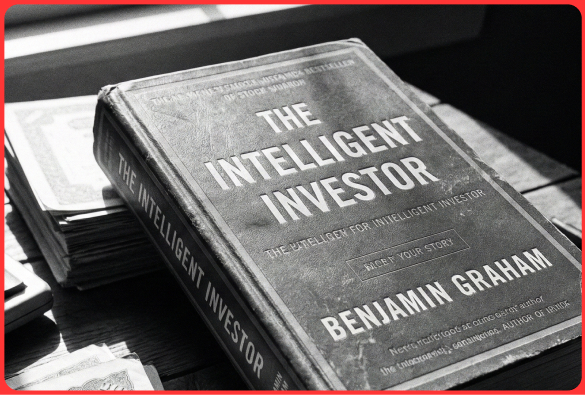
Table of Contents
Initially, the investment universe may seem like a maze of numbers, charts, and opposing viewpoints. Stock prices move fast and often feel random. Analysts use complex language, and financial news sounds urgent but remains hard to decode. In that environment, many readers turn to Benjamin Graham’s The Intelligent Investor for guidance. The book is widely seen as a cornerstone of value investing and is praised not only for its methods but also for the risk and discipline it teaches.
How The Intelligent Investor Shapes the Reader
Graham does not treat the market as a casino or a puzzle only experts can solve. Instead, The Intelligent Investor offers an ongoing, calm discussion about how to invest with reason, learn from mistakes, and stay disciplined over a whole lifetime of saving and investing. This message speaks to ordinary investors who are unsure where sound judgment ends and guessing begins. The narrative that follows traces how a reader’s thinking can change in response to this book. It moves through the chapters in order but focuses on how Graham’s main ideas fit together into one straightforward approach: separating investment from speculation, facing inflation as a silent threat, learning from market history, and choosing paths for both defensive and enterprising investors. Step by step, an initially confused market participant becomes more cautious but not fearful, curious but not reckless, and focused on long‑term outcomes instead of short‑term excitement.
Investment versus Speculation
In The Intelligent Investor, Graham starts by asking a simple question: What is a real investment, and what is only a bet? He explains that this difference sits at the base of the whole book. Once a reader understands this line, many subsequent ideas become more transparent and easier to apply in practice.
How The Author Defines an Investment
Graham says that an actual investment has three parts. It is based on careful study. It seeks to protect the money invested. It aims for a fair, not extreme, return. Any operation that fails these tests is speculation, no matter how expert or clever it sounds. This strict rule forces the reader to ask not only what is being bought, but why, and what facts support the choice.
How The Intelligent Investor Reveals Hidden Speculation
With this lens, much daily market activity turns out to be speculation in disguise. Buying a stock only because it has risen fast is speculation. Acting on rumors or tips is speculation. Buying based only on short‑term price moves is speculation as well. Graham allows speculation. He asks investors to be honest about it, keep it small and separate from earnest money, and never confuse it with long‑term investing. An intelligent investor accepts that capital should not be risked lightly or without real analysis.
Defensive and Enterprising Investors
From this point, Graham describes two main investor types. The defensive investor wants convenience and safety, and prefers a simple, steady plan with few decisions. The enterprising investor is ready to invest more time and energy in searching for undervalued opportunities, but only with clear rules and substantial evidence. The difference is not intelligence. It is temperament, free time, and a taste for effort. For readers who have swung between fear and excitement, this first chapter can be quietly life‑changing. Success now seems tied less to prediction and more to knowing one’s limits, choosing a path, and keeping the line between investing and gambling sharp.
The Investor and Inflation
In The Intelligent Investor, Graham next looks at a quiet but powerful force: inflation. He wants readers to see that rising prices alter the true meaning of investment returns. A gain in money terms can still be a loss in real life if prices rise faster than returns.
How Graham Explains Inflation
Graham argues that no investor can afford to ignore inflation. Inflation is the slow rise in prices over time. It cuts the buying power of money, year after year. A gain that looks fine in raw dollars may hide a real loss once inflation is counted. This insight breaks the simple belief that any positive return is a win.
To make this point, The Intelligent Investor reviews past periods of inflation and asks how different types of investments behaved. Over long stretches, common stocks often gave better protection. Companies can raise prices and grow earnings to keep pace with higher costs. Bonds, in contrast, can offer steady income, but that fixed income may lose value in real terms when inflation lasts for many years. Neither side is a perfect shield. Each has its own strengths and risks.
How The Intelligent Investor Suggests Handling Inflation
Graham then turns to practice. He tells investors to treat inflation as a permanent background risk and to shape their portfolios accordingly. For many people, this means holding a mix of high‑quality bonds and a spread of solid stocks. The exact balance can change over time with age, needs, and market levels. But the main idea remains stable: do not rely on a single asset type to face an uncertain future.
In The Intelligent Investor, the focus is on adjustment, not prediction. Graham does not ask readers to guess the exact rate of inflation in the coming years. Instead, he asks them to accept uncertainty and spread risk. By holding both sound bonds and well‑chosen stocks, the investor can soften the blow of long-term inflation and avoid the trap of placing all their hope in one “safe” choice.
Redefines Success
This chapter also changes the meaning of “success.” Graham urges readers not to celebrate gains that exist only on paper. Results should be judged by what the money can buy after inflation, not just by the size of the balance.
To drive this home, The Intelligent Investor contrasts two kinds of savers. One holds only long‑term bonds through years of high inflation and watches the real value of income shrink. The other keeps some share exposure and, over the decades, does better in terms of buying power. The lesson goes beyond math. Wise investors try to see through money illusions and measure progress against real life, not just against a pleasant number on a page.
Stock Market History and Cycles
After defining investment and explaining inflation, The Intelligent Investor turns to market history. Graham uses past booms and crashes to teach humility. He wants readers to see that market swings are standard patterns, not strange accidents.
How The Intelligent Investor Uses Past Cycles
Graham reviews long periods of rising and falling markets. He looks at famous episodes, like the Crash of 1929 and the long decline that followed. These are not treated as rare disasters, but as extreme cases of behavior that repeat over time. Prices rise, people grow bold, and then a sharp fall brings fear.
Throughout this review, the tone remains calm and factual. Graham explains that rising prices often tempt investors to drop their guard. They project recent gains far into the future and pay too much for popular stocks. When the mood turns, many of the same people swing from hope to panic. They sell strong companies at very low prices and lock in losses. The names and industries change, but the rhythm of greed and fear stays much the same.
Using History to Shape Behavior
The point of this chapter is not to turn readers into market historians, but to reset expectations. By seeing that no era is truly unique, the investor can resist the common claim that “this time is different” whenever a new boom appears. History does not allow exact timing, but it helps create a healthy doubt toward both wild optimism and deep despair.
For the developing intelligent investor, this chapter marks a fundamental shift. The focus moves away from daily price moves and toward long‑term patterns. Market changes start to look like part of a cycle rather than random shocks. This view later supports other core ideas in The Intelligent Investor, such as the image of Mr. Market and the need for a margin of safety. History becomes a working tool for setting goals and judging risk, not just an old story.
The Defensive Investor’s Portfolio
Once this background is set, The Intelligent Investor begins to shape actual portfolios. Graham returns to the two types of investors and now focuses on the defensive investor. This person wants a low‑effort, low‑stress plan that can still give decent long‑term results.
Designs a Defensive Portfolio
Graham suggests that the defensive investor hold a simple mix of two main assets. One part is made of high‑grade bonds. The other is made of high‑quality common stocks. Instead of trying to time the market, the investor maintains a balanced portfolio between the two. Often this means something like 25% to 75% in either direction, with 50/50 as a natural middle point.
The aim is not to find the perfect split at every moment, but to create a steady policy. This policy helps the investor avoid emotional shifts after every piece of news. Adjustments within the band can be made when markets are clearly high or very low, or when personal needs change. But the base rule stays in place.
What The Intelligent Investor Recommends for Bonds and Stocks
On the bond side, The Intelligent Investor favors safety and strong credit quality. Graham warns against risky bonds that promise high yield at the cost of stability. On the stock side, he recommends large companies with solid finances, long records of stable earnings, and regular dividends. The defensive investor is told to avoid hot sectors, complex products, and market fads.
A 50/50 split between bonds and stocks is presented as a good starting point. The investor may shift toward 25/75 or 75/25 only when conditions are clearly extreme—for example, when stock prices are very high, and bonds look much safer, or vice versa. The goal is to tie behavior to clear rules, not to sudden feelings.
How Graham Turns Theory into Daily Practice
This chapter shows how Graham’s ideas move from theory to practice. The defensive portfolio is a real‑world picture of humility. It accepts that most people cannot predict market turns or pick many star stocks. By keeping turnover low, avoiding flashy but fragile ideas, and sticking to clear standards, the defensive investor swaps thrills for strength.
The psychological gain is significant. Instead of losing sleep over every price drop, the investor can lean on a plan built to survive both bull and bear markets. The Intelligent Investor makes clear that this quieter style is not a sign of weakness. It is a choice to value peace of mind, steady growth, and protection from big mistakes over constant excitement.
Common Stocks for the Defensive Investor
After setting the overall mix of bonds and stocks, The Intelligent Investor looks more closely at which stocks suit the defensive investor. Graham wants this investor to focus on safety and steadiness, not on bold growth stories or hot tips.
Kind of Stocks
Graham argues that quality and consistency should guide stock choice for the defensive investor. The ideal company is large, has a strong balance sheet, and has shown stable or rising earnings over many years. It also has a long record of paying dividends without big breaks. These traits point to a business that can endure different market and economic conditions.
He suggests simple tests. These include a minimum company size, limits on debt relative to equity, steady earnings over at least a decade, and a reasonable price compared with earnings and assets. None of these rules is sold as magic. They act as filters, removing the weakest and most uncertain choices.
Diversification and Price Discipline
Graham stresses that even high‑quality companies can face trouble. To protect against this, the defensive investor should spread holdings across several industries and many stocks. A well‑diversified list of reliable, dividend‑paying shares, bought at moderate prices, can offer income, growth potential, and relative safety at the same time.
At the same time, The Intelligent Investor warns against fashionable growth stocks with very high price‑to‑earnings ratios. History shows many cases in which such favorites later failed to live up to the bright hopes built into their prices. For the defensive investor, avoiding overpayment matters more than catching every upside move. The steady habit of demanding quality, evidence, and a fair price shapes not only which stocks are chosen, but also when they are bought.
The Enterprising Investor’s Attitude and Scope
Once the defensive path is clear, The Intelligent Investor returns to the more active figure: the enterprising investor. This person is not satisfied with a mainly passive plan. Instead, time, effort, and close study are used to seek better‑than‑average results. Yet the same core principles still apply.
Enterprising Investor
Graham says that the enterprising investor accepts greater effort, not greater recklessness. The aim is not to guess market moves, but to find sound securities that the market misprices. The enterprising investor still relies on intrinsic value, margin of safety, and careful reading of facts. The difference from the defensive investor lies in the broader search and the deeper analysis, not in abandoning discipline.
Where the defensive investor mainly owns large, well‑known companies and high‑grade bonds, the enterprising investor looks further. Less popular big firms, smaller and mid‑size companies with solid figures, special situations, and clear bargains all fall within scope. This wider field, however, demands more control, not less. The enterprising investor must resist the pull of stories and excitement even more strongly than the average person.
Setting Rules for the Enterprising Investor
Graham insists that enterprising investors write down clear rules about what they will buy and what they will avoid. These rules can cover minimum size, balance‑sheet strength, earnings record, dividend history, and valuation limits. Such rules act like guardrails, stopping enthusiasm from sliding into random stock picking. They help keep effort focused on cases where facts support the hope of a mispricing.
The reward, The Intelligent Investor suggests, can be returns better than the market average. But this only happens when the investor is patient, selective, and emotionally steady. In Graham’s view, the enterprising investor is not a gambler using complex tricks. This investor is more like a research worker, moving carefully through a larger universe with a sharper set of tools.
Positive Approaches for the Enterprising Investor
After defining the enterprising investor, The Intelligent Investor turns to specific methods this investor can use. Graham explains several positive ways to seek extra return while staying inside the bounds of careful investing.
Bargains and Special Situations
One core idea is the search for bargain securities. These are stocks selling well below a cautious estimate of their worth. Some even trade at a price below their net current assets. Others trade at low prices compared with long‑term earnings or asset values. The margin between price and value offers protection and room for gain.
Another field is “special situations.” These arise from events such as mergers, liquidations, restructurings, or spin‑offs. In these cases, the market may misjudge the likely outcome. A careful study of terms, assets, and legal details can reveal opportunities that others ignore. The goal is not to chase rumors, but to base decisions on clear facts.
Screens and Careful Study
Graham suggests that the enterprising investor can start with simple numerical “screens.” These screens filter for companies with low price‑to‑earnings ratios, strong balance sheets, steady profits, and other clear strengths. From that smaller list, a deeper reading of reports and industry context can follow. This turns a huge market into a manageable set of possible bargains.
The Intelligent Investor compares this work to detective work. The investor gathers clues from numbers and narrative. Every claim must be tested. Only when the case for undervaluation is strong should money be committed. Graham notes that this approach is not a quick‑rich plan. It demands patience, learning, and a strong temperament.
Market Fluctuations and the Mr. Market Allegory
Next, The Intelligent Investor turns from selection to price swings. Graham wants investors to see market changes not as threats, but as offers. To teach this, he uses one of the book’s most famous images: Mr. Market.
Mr. Market
Graham asks the reader to imagine owning a private business with a partner called Mr. Market. Each day, Mr. Market offers either to buy your share or to sell you his. His price changes all the time. Some days, he is cheerful and quotes a high price. On other days, he is fearful and offers a very low one. His moods, not calm thought, drive these quotes.
The key point is that you are never forced to act. You can ignore Mr. Market on days when his price seems foolish. You can buy when his fear is excellent, and prices are low. You can sell when his optimism is wild, and prices are high. The choice is always yours.
How Mr. Market Guides Temperament
This story changes how the investor sees price moves. In The Intelligent Investor, price is not the same as value. Price is simply what Mr. Market feels at a moment. Value comes from the business itself—its assets, earnings power, and prospects. The space between price and value is where the intelligent investor works.
When prices fall for no good reason, the investor can see a chance, not a threat. When prices soar far above reasonable value, the investor can sell or simply refuse to buy. Mr. Market’s moods become tools rather than traps. Learning this lesson and linking it to the idea of the margin of safety helps the investor stay calm when others are afraid or greedy.
Investment Funds and Their Proper Use
After discussing individual securities, The Intelligent Investor turns to mutual funds and other pooled vehicles. Graham knows that many people will use funds to gain diversification and to avoid picking their own stocks.
Views Investment Funds
Graham accepts that well‑run funds can help investors. They can spread risk across many holdings, reduce the harm from any single failure, and simplify record‑keeping. This makes them valuable, especially for those who lack the time or skill to manage a portfolio of single stocks.
But The Intelligent Investor warns that funds are often misused. Many buyers pick funds only because of strong recent returns. They assume that good past performance will continue. Others ignore fees, turnover, and whether managers stick to a clear strategy. To Graham, this turns fund investing into another way of chasing performance instead of following reason.
Choose and Use Funds
Graham advises investors to judge funds with the same care used for single stocks. Key points include costs, stated policy, long‑term record, and how calmly the fund behaved in tough times. For the defensive investor, he favors broad, conservative funds. The enterprising investor may consider more focused funds, but only after careful study.
In all cases, The Intelligent Investor insists that responsibility stays with the owner. Buying a fund does not remove the duty to understand what is owned and why. Prudence and common sense must still guide selection and review. A fund is a tool, not a license to stop thinking.
The Role of Investment Advisers
Linked to the topic of funds is the question of advice. The Intelligent Investor recognizes that many people will seek help from brokers, planners, or portfolio managers. Graham looks at what good advice should and should not be.
What a Good Adviser Looks Like
In Graham’s ideal picture, a good adviser is a teacher and a steadying force. This person helps clients set clear goals, choose between defensive and enterprising paths, and stay on course when markets swing. The adviser does not promise secret formulas or huge gains. Instead, they promote sound practice, broad diversification, and patience with a sensible plan. Pay should be clear, and suggestions should come from analysis, not from sales pushes.
What The Intelligent Investor Warns About
Graham criticizes advisers who focus on short‑term forecasts, rapid trading, or the latest trend just to seem active. He notes that Wall Street can produce a flood of noise that adds little value. Investors who use advisers must form their own standards for trust: shared interests, honest methods, and proof that client welfare comes before product sales.
In The Intelligent Investor, even those who hire experts remain the final decision‑makers. The act of accepting or rejecting advice is itself an investor’s choice. That means the duty to think cannot be fully handed away. Advice can guide, but it cannot replace judgment.
Security Analysis for the Lay Investor
In The Intelligent Investor, Graham now turns back to the individual reader. He outlines a basic framework for security analysis that even non‑professionals can use. He does not expect every person to become a full‑time analyst. But he argues that a modest level of understanding is both possible and necessary.
What The Intelligent Investor Says to Examine
Graham points to a few key factors when judging a common stock. These include the company’s long‑term earnings record, its financial strength and debt use, its dividend history, and the stability of its growth. He urges investors to look at at least ten years of results when they can. The test is whether the business has stayed sound through good and bad times.
A strong balance sheet, careful use of borrowing, and consistent profits help create a margin of safety. In contrast, erratic earnings, weak cash reserves, and heavy debt point to danger. Graham does not hide these facts in complex formulas. He wants the reader to see that a few basic checks can reveal a lot.
How The Intelligent Investor Simplifies Analysis
For the lay investor, Graham suggests reading annual reports and using a few simple ratios. Measures such as earnings per share and assets per share can help compare firms within the same industry. The goal is not a perfect number carried out to many decimal places. Instead, he wants the investor to form a careful estimate of value and risk.
Security analysis, in this view, is less a secret art and more a steady habit. It means asking clear questions and refusing to act until there are solid answers. By the end of this chapter, the reader sees that thoughtful fact-checking is within reach, even without a professional background.
Per‑Share Earnings and Their Limitations
Graham then focuses on one figure that many investors watch closely: earnings per share. In The Intelligent Investor, he warns that this number can mislead if taken at face value. It is widely used but not always well understood.
Warns About Earnings Per Share
Graham explains that many forces can shape reported earnings. Accounting choices, one‑time events, and management decisions can raise or lower profits in ways that do not reflect normal business health. A company may show strong earnings growth over several years. Yet that strength may come from temporary gains, aggressive accounting, or deep cost cuts that cannot last.
Because of this, The Intelligent Investor advises looking at earnings over a long period. Graham suggests “smoothing” results by considering many years and adjusting for special items such as significant sale gains. He urges readers to focus on “earnings power,” which means what the company can reasonably earn in a typical environment.
Earnings in Valuation
Graham also warns against valuing companies only by short‑term earnings ratios. Paying very high price‑to‑earnings multiples for fast‑growing firms can be risky. History shows many cases where growth slowed or reversed, leaving optimistic buyers with poor returns or real losses.
For the intelligent investor, earnings per share are a starting point, not a final answer. Context matters: How stable are the earnings? How were they achieved? What are fair expectations for the future? In this way, the reader learns to look past impressive headlines and seek deeper quality in the numbers.
Comparing Companies and Looking Beneath the Surface
With the basics of analysis in place, The Intelligent Investor moves deeper into comparison. Graham stresses the value of judging companies side by side instead of in isolation. Two firms may seem similar on the surface, yet differ significantly in strength and risk.
Side‑by‑Side Comparisons
Graham points out that companies can report alike earnings, operate in the same industry, or trade at similar prices. Yet their balance sheets, debt levels, dividend habits, and sensitivity to downturns may differ sharply. Without comparison, an investor may treat them as equals when they are not.
He urges readers to place balance sheets and income statements side by side. Questions about debt, cash, profits, and dividend policy then become easier to answer. Over time, this practice trains the eye to look past marketing and reputation and to see the real health of each business. Sometimes, the “plain” company proves safer and stronger than its famous rival.
Teaching Through Comparative Analysis
This style of analysis protects against overpaying merely because a firm resembles a popular leader. It also helps uncover quiet companies in the same field that have better finances or more honest treatment of shareholders. For the thoughtful investor, value comes from this kind of careful sorting.
Graham wants readers to see that not all earnings are of equal quality. Not all growth is healthy, and not all praise is deserved. Comparative study becomes a tool for better judgment and for building a portfolio on substance rather than image.
Stock Selection for the Defensive Investor
Having laid out broad principles, The Intelligent Investor now offers more exact rules for the defensive investor’s stock choices. The goal is not to win spectacular gains, but to avoid severe loss and disappointment over the long run.
Setting Rules for Defensive Stock Picking
Graham suggests several practical tests for defensive stock selection. The list includes a minimum company size, stable earnings for at least 10 years, an unbroken record of dividend payments, a moderate price‑to‑earnings ratio, and a reasonable relation between price and asset value. These standards aim to screen out small, heavily indebted, and speculative firms.
By applying these filters, the defensive investor gives up some possible upside. But in return, the risk of permanent capital loss drops. The portfolio becomes filled with large, conservatively financed, dividend‑paying companies bought at fair or bargain prices. This is the kind of trade‑off Graham wants the cautious investor to make.
Diversification for the Defensive Investor
Graham also stresses diversification within these rules. Holding many suitable stocks across different industries reduces the impact of any single mistake. The overall result then depends on the steady progress of sound business rather than on a few heroic winners.
For the defensive investor, stock selection is less about genius and more about steady rule‑keeping. The Intelligent Investor teaches that long‑term comfort comes from consistency, clear standards, and respect for risk rather than from bold moves.
Stock Selection for the Enterprising Investor
Graham then returns to the enterprising investor and sets a different level of challenge. Here, the search is for securities that sell at clear discounts to well‑reasoned estimates of value. This path is more challenging but can offer higher rewards.
Enterprising Stock Picking
The enterprising investor looks for neglected or unpopular large companies, smaller firms with strong balance sheets and temporary troubles, and “bargain issues” priced below net current asset value. The core idea is the same: price should be well below conservative value, with a wide margin of safety.
The tests here are stricter on price. Graham suggests seeking low price‑to‑earnings ratios compared with past norms, low price‑to‑book ratios, or prices that assume very poor future results. Sometimes, special events such as restructurings or legal settlements may create an extra opportunity when markets overreact.
Demands of the Enterprising Investor
Graham warns that this field requires patience and control. The enterprising investor must wait for mispriced chances, study them more deeply than the average buyer, and accept that the market may take time to correct its errors. Diversification still matters, but holdings are more focused on issues that meet strict bargain standards.
When practiced with care, this approach turns Mr. Market’s pessimism into an ally. Instead of fearing low prices, the enterprising investor welcomes them when they appear in sound companies. The Intelligent Investor makes clear, however, that such work is demanding. It is a path for those who genuinely wish to commit time and thought.
Convertible Issues and Warrants
Next, The Intelligent Investor looks at more complex securities. Graham discusses convertible bonds, convertible preferred stock, and warrants. These combine features of fixed‑income and equity and can seem very attractive at first glance.
Convertibles and Warrants
Convertible bonds and preferred shares pay interest or dividends but also allow conversion into common stock under specific terms. Warrants give the right to buy shares at a set price in the future. These features promise both income and possible growth. On the surface, they appear to offer the best of both worlds.
Graham explains that the real value of these instruments depends on several points. The key factors include the issuer’s financial strength, the conversion price, maturity, call features, and the current stock price relative to the conversion terms. Ignoring these details can expose investors to risks they may not initially see.
Warns About Hidden Risks
Graham stresses that added complexity often brings hidden danger. A security can have appealing terms but rest on a weak company. In such cases, no clever clause can offset poor underlying strength. He insists that the issuing firm must pass strict quality tests before any convertible or warrant deserves attention.
He also warns against paying too much for “option value.” Investors must be realistic about the likelihood of conversion or exercise. If the odds are low, paying a high premium for that right is unwise. Complexity should never replace margin of safety. At best, it can enhance a sound position when fully understood.
Four Extremely Instructive Case Histories
To connect theory with real life, The Intelligent Investor presents several case studies. Graham reviews companies whose stories show what happens when sound rules are followed or ignored. These examples turn abstract ideas into vivid lessons.
Corporate Stories
The cases include once‑popular firms that later failed, as well as companies whose image did not match their actual condition. One story might feature a large transport company that collapses under heavy debt and poor management, despite earlier praise. Another may describe a fast‑growing conglomerate that expands through acquisitions only to reveal weak practices and falling strength.
There are also examples of firms with business models too fragile to survive tough times. These companies were sold as “the future,” yet lacked the balance sheet to endure a downturn. In each case, ignoring basic safety and valuation tests led to trouble.
What The Intelligent Investor Wants Readers to Learn
These histories remind readers that size, fame, and fashion do not guarantee safety. Graham uses them to support his calls for conservative finances, honest accounting, reasonable prices, and doubt toward rapid, debt‑driven growth.
For the intelligent investor, each failure becomes a warning sign to look for in new situations. The stories show that margin of safety and disciplined analysis are not abstract virtues. They are practical shields against errors that have hurt many people before.
A Comparison of Eight Pairs of Companies
Graham then expands his comparative method. The Intelligent Investor examines several pairs of companies, each chosen to show a useful contrast. These pairs highlight how the market can misprice similar‑looking firms.
Company Pairs
In some pairs, a steady, conservative firm trades at a modest valuation. Its more glamorous rival, with weaker or equal fundamentals, trades at a much higher price. In other cases, a sound company with temporary problems is ignored, while a more speculative business draws strong demand.
By setting these examples side by side, Graham shows how fashion and stories can distort prices. Investors who focus only on the most talked‑about names may pay too much for excitement and too little for safety.
What This Teaches the Intelligent Investor
The exercise builds the habit of asking, “What am I getting for the price I pay, compared with other choices?” Instead of judging a company in isolation, the investor measures it against peers on earnings, assets, growth prospects, and balance‑sheet strength.
This broader view helps reduce the pull of marketing and crowd behavior. It directs attention back to value and risk. The Intelligent Investor uses these pairs to show that careful comparison can reveal both overpriced hopes and underpriced strength.
Chapter 19: Shareholders and Management
The Intelligent Investor then turns from picking securities to the link between owners and managers. Graham reminds readers that owning a stock means owning part of a real business run by real people. Their choices shape shareholder results.
Dividends and Policy
Graham pays special attention to dividends. He does not claim that every company must pay high dividends at all times. But he sees a steady record of fair payouts as a sign of respect for owners and confidence in earnings power. Sudden cuts without good reason, or keeping too much profit with no clear use, can signal poor alignment with shareholders.
He also stresses clear communication. Management should explain its policies and respond honestly to problems. Vague or evasive language about earnings and payouts undermines trust. For Graham, transparency and good governance stand alongside financial strength as pillars of a sound investment.
The Role of the Shareholder
Graham urges readers to see themselves as active owners, not passive traders. He asks shareholders to read reports with a critical eye, note how leaders discuss setbacks, and judge whether boards seem independent and alert. This attitude supports all of his other teachings: margin of safety and sound analysis work best when combined with demands for honest, shareholder‑oriented management.
In The Intelligent Investor, responsible ownership is part of intelligent investing. The investor cannot simply hope that executives will act wisely. There must be an ongoing effort to assess whether management decisions match the long‑term interests of the owners.
Margin of Safety as the Central Concept
The book ends by returning to its core idea: margin of safety. The Intelligent Investor presents this as the main rule that ties all other lessons together. It is both a number and a way of thinking.
Margin of Safety
Graham states that investors should buy only when the price is well below a cautious estimate of value. That gap is the margin of safety. It protects against analysis errors, bad luck, and the natural swings of markets. Even careful work can be wrong, so the price must leave room for error.
This rule applies to many kinds of investments. For bonds, it can mean that earnings and assets cover interest and principal by a wide margin. For stocks, it can mean a sound company priced low relative to its normal earnings or asset value. In each case, the investor prepares for surprises instead of trying to predict every detail.
Linking Margin of Safety to Temperament
Graham makes clear that the margin of safety is also a state of mind. It trains investors not to pay top prices driven by hope or fear of missing out. It encourages them to demand clear evidence that they are getting more value than they are paying for.
When joined with the Mr. Market story, history lessons, and the tools of analysis, the margin of safety becomes the cornerstone of the whole approach. The Intelligent Investor ends by showing that accurate intelligence in investing lies less in prediction and more in protection, patience, and faithful use of tested principles.
Conclusion: Enduring Influence and Personal Change
Taken together, the chapters of The Intelligent Investor form more than a technical guide. They describe a slow change in how an investor thinks and acts. The journey often begins with confusion, anxiety, and a habit of chasing market noise. Graham’s framework shifts attention toward clear definitions, steady rules, and character.
Shapes the Whole Approach
The book first distinguishes between investment and speculation and treats inflation as a constant backdrop. It uses market history to show that current events are rarely unique. It then lays out paths for both defensive and enterprising investors, each with its own demands and rewards.
The defensive path stresses simplicity, quality, and diversification. It shows that fair results are possible without constant action or exceptional brilliance. The enterprising path, while harder, offers a structured way to seek better returns through bargains, special situations, and deeper analysis—always with a margin of safety and emotional control at the center.
How The Intelligent Investor Changes Temperament
All through the book, Graham highlights temperament. The Mr. Market story teaches that prices reflect shifting moods rather than steady values. The chapters on funds, advisers, case studies, and corporate governance repeat the same core message: responsibility cannot be handed away. Outside help works only when judged with clear eyes.
Over time, success is measured less by short‑term gains and more by sound process and inner steadiness. Thinking about value, risk, and margin of safety replaces emotional reactions to price swings. Losses become chances to learn. Wins are credited to good methods rather than to luck or special genius.
Why The Intelligent Investor Remains Relevant
Because of this blend of method and mindset, The Intelligent Investor continues to matter to new generations. It treats investing not as a game, but as a long‑term activity that demands patience, humility, and independent thought. It teaches readers to see stocks as pieces of real businesses, to insist on value and safety in every purchase, and to watch their own impulses as closely as they watch the market.